

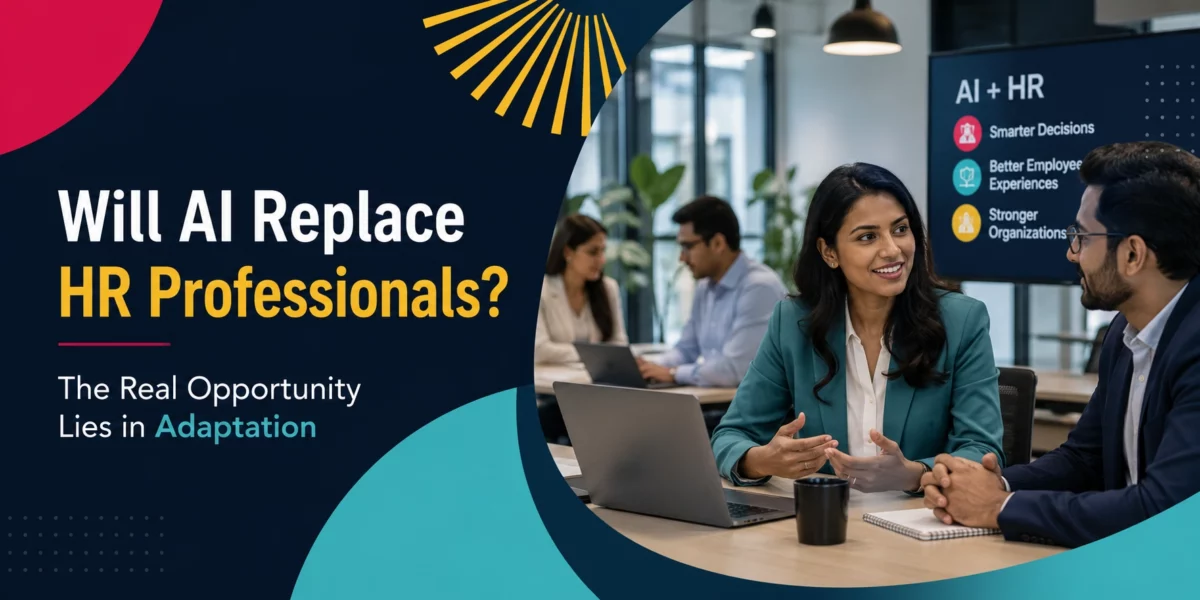
As an HR Professional, What Happens If I Don’t Adapt to AI?
Human Resources has always been about people.
Recruiting talent. Supporting employees. Building workplace culture. Managing performance. Developing future leaders.
While those responsibilities remain important, the tools used to perform them are changing rapidly.
Artificial Intelligence (AI), automation, workforce analytics, and digital HR technologies are transforming how Human Resources departments operate.
The question many HR professionals should be asking is:
What Happens If I Don’t Adapt?
The answer may significantly influence your future career opportunities.
AI Is Not Replacing HR Professionals
Let’s begin with an important reality.
AI is not replacing Human Resources professionals.
Organizations will always need people who can:
• Build relationships
• Understand employee needs
• Manage workplace issues
• Develop talent strategies
• Support organizational culture
• Lead change initiatives
However, AI is changing how HR work gets done.
The HR professionals who understand technology will often become more productive, more strategic, and more valuable to their organizations.
HR Is Becoming More Data-Driven
Traditionally, many HR activities involved significant manual effort.
Examples include:
• Resume screening
• Interview scheduling
• Employee onboarding
• Policy administration
• Training coordination
• Employee record management
Today, many organizations use technology to streamline these activities.
AI-assisted tools can help with:
• Candidate screening and matching
• Job description development
• Interview scheduling
• Employee communications
• Learning and development recommendations
• Workforce analytics and reporting
This allows HR professionals to focus more on strategic activities and employee engagement.
Employers Are Looking for Modern HR Skills
Today’s employers increasingly seek HR professionals who understand:
• HR Information Systems (HRIS)
• Workforce analytics and reporting
• AI-assisted recruitment tools
• Digital onboarding systems
• Learning management platforms
• Employee engagement technologies
• Data privacy and compliance requirements
• AI productivity tools such as Microsoft Copilot
Modern HR professionals are becoming technology-enabled business partners.
What Could Happen If You Don’t Adapt?
Reduced Career Opportunities
Organizations increasingly prefer HR professionals who can combine people skills with technology skills.
Lower Productivity
Manual processes that once took hours may now take minutes with the help of modern tools.
Limited Advancement Opportunities
HR leadership roles increasingly require experience with workforce analytics, digital transformation, and technology adoption.
Competitive Disadvantage
New HR professionals entering the workforce are often familiar with AI tools, analytics platforms, and digital HR systems.
Keeping your skills current is becoming increasingly important.
What Skills Should HR Professionals Develop?
You do not need to become a programmer.
You do not need to become a data scientist.
However, developing knowledge in the following areas can strengthen your career prospects:
Artificial Intelligence for HR
Learn how AI can support recruitment, onboarding, training, communication, and employee engagement.
Workforce Analytics
Understand how to use data to improve hiring, retention, and workforce planning.
HR Technology Platforms
Gain experience with digital HR systems and learning management platforms.
AI Productivity Tools
Learn how tools such as Microsoft Copilot and Generative AI can improve efficiency.
Digital Transformation
Understand how organizations are redesigning processes using technology.
Data Privacy and Compliance
Employee data protection is becoming increasingly important in a digital workplace.
The Future HR Professional Will Be a Strategic Workforce Advisor
Tomorrow’s HR leaders will do more than administer policies and process paperwork.
They will help organizations:
• Attract and retain talent
• Build future workforce strategies
• Improve employee experiences
• Support organizational change
• Leverage workforce data
• Guide AI adoption responsibly
The future belongs to HR professionals who can combine human insight with technological capability.
How Canadian College for Higher Studies Can Help
Canadian College for Higher Studies (CCHS) offers programs and professional development opportunities that help business and administrative professionals prepare for today’s technology-driven workplace.
Professionals can build skills in:
• Business Administration
• Business Analytics
• AI Productivity Tools
• Digital Transformation
• Leadership and Communication
• Data-Driven Decision Making
One-Day Workshops and Micro-Skills Training
Popular topics include:
• Artificial Intelligence for Business Professionals
• Microsoft Copilot Essentials
• AI Productivity and Automation
• Business Analytics Fundamentals
• Digital Transformation for Modern Organizations
The Choice Is Yours
The Human Resources profession is not disappearing.
It is evolving.
Those who embrace AI, workforce analytics, automation, and digital business tools will likely find new opportunities, stronger career growth, and greater influence within their organizations.
Those who ignore these changes may find themselves increasingly competing with professionals who understand both people and technology.
The question is not whether AI will affect Human Resources.
The question is whether you will be ready when it does.
Contact Canadian College for Higher Studies to learn about diploma programs, workshops, micro-skills training, and workforce development opportunities that can help you prepare for the future of work.
Frequently Asked Questions
Artificial Intelligence is changing the way HR departments operate, but it is not eliminating the need for HR professionals. Human expertise remains essential for employee relations, leadership development, workplace culture, and strategic decision-making.
Many organizations are adopting HR Information Systems (HRIS), workforce analytics platforms, AI-powered recruitment tools, digital onboarding solutions, learning management systems, and productivity tools such as Microsoft Copilot.
No. HR professionals do not need programming expertise. Understanding how to use AI tools, interpret workforce data, and manage digital HR platforms is usually enough to remain competitive in the evolving workplace.
AI helps automate repetitive tasks such as candidate screening, interview scheduling, employee communications, and reporting. This allows HR teams to devote more time to employee engagement, talent development, and business strategy.
Organizations increasingly value HR professionals who can combine strong people skills with knowledge of analytics, automation, and digital workplace technologies. These capabilities support better decision-making and improved business outcomes.
Continuous learning is the best approach. Developing knowledge in AI applications, business analytics, digital transformation, and modern HR technologies can help professionals stay relevant and unlock new career opportunities.
Latest Post
- What Is Agentic AI? Skills, Careers & Future Job Opportunities
- Best Courses to Get a Job in Canada After Graduation
- AI, IoT and Edge Computing: How These Technologies Work Together
- AI-Powered Cyber Attacks: What Students & Businesses Must Know
- What Is Healthcare Administration and Is It Good in Canada?