

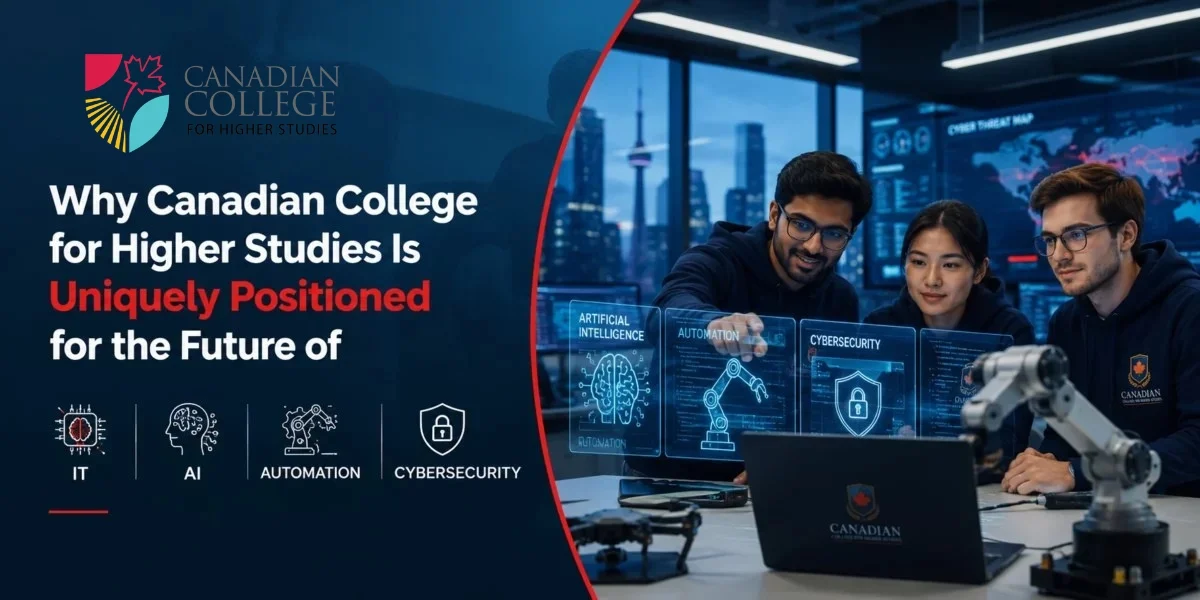
The Technology Industry Is Changing Everything
The technology industry is undergoing one of the most significant transformations in history.
Artificial Intelligence is changing how organizations operate – from customer service and supply chain management to financial reporting and healthcare diagnostics.
Automation is transforming workflows that once required entire teams of professionals, enabling organizations to do more with greater speed and fewer errors.
Cybersecurity threats continue to grow in frequency, sophistication, and impact. Data breaches, ransomware attacks, and nation-state hacking campaigns are no longer exceptional events – they are a regular feature of the modern digital landscape.
Cloud computing is becoming the foundation of modern business operations. Organizations that once managed physical servers and on-premises infrastructure are rapidly migrating to cloud platforms, and that migration is accelerating.
Data analytics is driving business decisions at every level. Organizations that can collect, process, and interpret data effectively are outcompeting those that cannot.
As Canada invests billions of dollars in Artificial Intelligence and organizations accelerate digital transformation initiatives, the demand for skilled technology professionals has never been higher. Employers increasingly seek professionals who possess a combination of technical expertise, business understanding, security awareness, and AI literacy – not just one or two of these things, but all of them together.
We Are Not Teaching Yesterday’s Technology
One of the most important things to understand about technology education is that it can become outdated quickly. A curriculum designed five or ten years ago may still teach foundational concepts that are relevant – but it may also be missing the technologies that organizations are actually using today.
- Artificial Intelligence
- Cloud Computing
- Automation
- Containerization
- Edge Computing
- Governance Automation
- Cybersecurity Analytics
These are not niche or emerging topics anymore. They are core competencies that modern IT and business professionals are expected to understand. An IT graduate who has never worked with cloud environments, or a cybersecurity professional who has no exposure to AI-enhanced threat detection, enters the workforce at a significant disadvantage.
At CCHS, our programs have been modernized to reflect the technologies that organizations are adopting today and will increasingly depend on tomorrow. We continuously evaluate our curriculum against the realities of the job market, the technologies employers are investing in, and the direction in which the industry is heading.
Our goal is not simply to prepare students for their first job.
Our goal is to prepare them for the future of work – which means building skills that will remain relevant and continue to grow in value over the course of a career.
Our Programs Reflect How Modern Organizations Actually Operate
There is another important shift in how technology education needs to be approached, and it goes beyond simply updating the course list.
Today’s organizations no longer view technologies in isolation. In the past, it was common for businesses to have separate teams for IT support, networking, security, and data management – with each group operating in its own silo. That model has largely broken down.
Modern enterprises depend on a tightly integrated combination of:
- Cloud Infrastructure
- Cybersecurity
- Artificial Intelligence
- Data Analytics
- Automation
- Governance and Compliance
- Enterprise Linux Platforms
- Digital Transformation
These technologies work together. A cybersecurity team that does not understand cloud environments cannot effectively protect a cloud-based organization. A data analyst who does not understand AI cannot take full advantage of the predictive and intelligence tools that modern analytics platforms offer. A systems administrator who has never worked with containers or Kubernetes is unprepared for the infrastructure environments that most modern organizations are building.
Our programs are designed with this reality in mind. Rather than teaching technologies as isolated subjects, CCHS prepares students to understand how these disciplines connect – and how to apply that integrated knowledge in real workplace environments.
Strong Foundation in Cloud Computing
Cloud technologies now support virtually every modern business application. Whether an organization uses Microsoft Azure, Amazon Web Services (AWS), Google Cloud Platform (GCP), or hybrid environments that combine cloud and on-premises systems, cloud skills are increasingly essential for IT professionals at every level.
The shift to cloud computing has been one of the defining trends of the past decade, and it is far from complete. Organizations of all sizes – from small businesses to government agencies to global enterprises – are continuing to migrate workloads to the cloud, build cloud-native applications, and retire legacy infrastructure.
For IT professionals, this means cloud competency is no longer optional. It is a baseline requirement.
Diploma in Cloud-Based IT Support & Cybersecurity
Preparing IT professionals for modern cloud-enabled workplaces.
Students develop practical skills in:
- Cloud-Based IT Support
- Windows and Linux Administration
- Networking Fundamentals
- Cybersecurity Operations
- Cloud Services and Infrastructure
- IT Automation and Troubleshooting
- AI-Powered Productivity Tools
Career Opportunities: IT Support Specialist, Technical Support Analyst, Cloud Support Technician, Service Desk Analyst, Junior Cybersecurity Technician
Typical Ontario Salary Range: $50,000 – $85,000+
This diploma program is designed to give graduates the technical foundation and the cloud-specific skills they need to enter the IT workforce confidently – with the kind of practical, job-ready competencies that employers are actively looking for.
Cybersecurity Enhanced by Artificial Intelligence
Cybersecurity is no longer simply about firewalls and antivirus software.
The nature of cyber threats has evolved dramatically. Modern attacks are sophisticated, fast-moving, and often designed to evade traditional detection methods. Threat actors use automation and, increasingly, AI to identify vulnerabilities, scale attacks, and avoid leaving traces.
To defend against these threats effectively, organizations are turning to AI-powered technologies to detect anomalies, identify patterns in network behavior, and respond to incidents faster than any human team could manage alone. Security operations centers that once relied entirely on human analysts are now augmented with intelligent systems that can process enormous volumes of security data in real time.
This means cybersecurity professionals of the future need to understand AI – not just as a concept, but as a practical tool in the security workflow.
Diploma in Cybersecurity with Artificial Intelligence
Preparing cybersecurity professionals for AI-enhanced digital defense.
Students develop practical skills in:
- Cybersecurity Fundamentals
- Threat Detection and Analysis
- Network Security
- Security Operations
- Artificial Intelligence Concepts
- AI Applications in Cybersecurity
- Security Monitoring and Incident Response
Career Opportunities: Cybersecurity Analyst, Security Operations Analyst, Network Security Technician, Information Security Coordinator
Typical Ontario Salary Range: $60,000 – $120,000+
Cybersecurity is one of the fastest-growing fields in the Canadian technology sector, and the combination of security expertise with AI knowledge positions graduates for some of the most in-demand roles in the industry.
Data Analytics, Edge AI, and Intelligent Decision-Making
Data is becoming one of the most valuable assets in modern organizations. The ability to collect, process, and interpret data – and to turn raw information into actionable business intelligence – is a capability that organizations across every sector are investing in heavily.
Organizations increasingly rely on analytics, predictive models, and intelligent systems to make better decisions. Whether it is a retailer using predictive analytics to manage inventory, a hospital using data models to improve patient outcomes, or a financial institution using machine learning to detect fraud, the applications of data analytics are virtually limitless.
Edge AI – the deployment of artificial intelligence at or near the data source rather than in a centralized cloud – is an increasingly important frontier. As organizations deploy more connected devices, sensors, and intelligent systems in the physical world, the ability to process data and make decisions at the edge becomes critical.
Diploma in Cloud Data Analytics & Edge AI Security
Preparing professionals for the future of analytics, intelligent monitoring, and secure Edge AI environments.
Students develop practical skills in:
- Data Analytics
- Business Intelligence
- Predictive Analytics
- Cloud Databases
- Edge AI Technologies
- Healthcare Analytics
- Intelligent Monitoring Systems
- Data Security and Privacy
Career Opportunities: Data Analyst, Cloud Data Analyst, Business Intelligence Analyst, Predictive Analytics Associate
Typical Ontario Salary Range: $65,000 – $120,000+
This program prepares graduates for a landscape in which data skills and AI literacy are inseparable – and where the ability to work with intelligent systems at the edge of the network is becoming a genuine differentiator.
Preparing the Next Generation of AI Professionals
Artificial Intelligence is no longer a future technology. It is a present reality that is already reshaping industries, transforming job roles, and creating entirely new categories of work.
The demand for professionals who genuinely understand AI – who can develop, deploy, support, and optimize intelligent systems – is growing rapidly and is expected to continue growing for the foreseeable future. This includes machine learning engineers, deep learning specialists, natural language processing professionals, and intelligent automation designers.
Canada has positioned itself as a global leader in AI research and development, with major investments in AI hubs in Toronto, Montreal, and Edmonton. As Canadian organizations move from AI research to AI implementation, the need for professionals who can bridge the gap between AI concepts and real-world applications is intensifying.
Advanced Diploma in AI, Deep Learning & Natural Language Processing
Preparing professionals to develop and support intelligent systems.
Students develop skills in:
- Artificial Intelligence
- Machine Learning Concepts
- Deep Learning
- Natural Language Processing
- Predictive Analytics
- Intelligent Automation
Career Opportunities: AI Specialist, Machine Learning Associate, AI Solutions Analyst, Intelligent Systems Coordinator
Typical Ontario Salary Range: $70,000 – $150,000+
This advanced diploma program is designed for professionals who want to move beyond AI literacy into genuine AI competency – with the technical knowledge and hands-on experience to work with intelligent systems in real organizational settings.
Modern Systems Administration Has Changed
The role of systems administrator and infrastructure professional has been transformed by the shift to cloud computing and the rise of containerized application architectures.
Today’s systems administrators and infrastructure professionals must manage environments that look very different from the server rooms of the past. Modern infrastructure is distributed, dynamic, and often cloud-native – built on container platforms, orchestrated by tools like Kubernetes, and deployed across multiple cloud providers simultaneously.
Professionals who understand these environments are in high demand. Those who are still working exclusively with traditional on-premises infrastructure concepts may find their skills increasingly mismatched with what employers need.
Advanced Diploma in Security and Automation of Multi-Cloud Containerized Workloads
Preparing modern systems administrators for the cloud-native era.
Students develop skills in:
- Kubernetes
- Docker
- Multi-Cloud Administration
- Infrastructure Automation
- DevOps Operations
- Cloud Security
- Enterprise Systems Administration
Career Opportunities: Systems Administrator, Cloud Administrator, Infrastructure Administrator, DevOps Technician
Typical Ontario Salary Range: $70,000 – $130,000+
This program gives systems and infrastructure professionals the modern skill set needed to manage complex, cloud-native environments – including the automation and security capabilities that today’s enterprises depend on.
Enterprise Linux Remains the Foundation of Modern Infrastructure
Despite all the changes in the technology landscape, one thing has remained remarkably consistent: Linux is the operating system that powers most of the world’s most important systems.
Cloud platforms, enterprise applications, cybersecurity tools, AI systems, and web infrastructure often depend on Linux-based environments. The majority of cloud servers run on Linux. Most containerized workloads run on Linux. A significant portion of the cybersecurity tooling that organizations rely on is built for Linux.
This means Linux expertise remains deeply valuable – not as a legacy skill, but as a foundational capability that connects to virtually every other area of modern technology.
Diploma in Enterprise Linux & Application Security Engineering
Building secure enterprise environments from the operating system upward.
Students develop skills in:
- Enterprise Linux Administration
- Application Security
- Server Hardening
- Automation and Scripting
- Hybrid Infrastructure Management
- Secure Enterprise Operations
Career Opportunities: Linux Administrator, Systems Engineer, Infrastructure Specialist, Application Security Administrator
Typical Ontario Salary Range: $70,000 – $140,000+
This program is designed for professionals who want to build deep expertise in the operating system that underpins modern enterprise infrastructure – with a strong emphasis on security, automation, and real-world application.
Governance, Compliance, and Enterprise Security
As organizations become more digital, governance and compliance are becoming increasingly important – and increasingly complex.
The volume of sensitive data that organizations collect and manage is growing. Regulatory requirements are expanding. Security threats are evolving. And the consequences of governance failures – financial penalties, reputational damage, operational disruption – are more serious than ever.
Organizations need professionals who can not only implement security controls, but who can also design and manage governance frameworks, ensure regulatory compliance, and automate the processes that keep enterprise environments secure and accountable.
Post-Graduate Diploma in Enterprise Cybersecurity & Governance Automation
Preparing professionals to secure, govern, automate, and manage modern enterprise environments.
Students develop practical skills in:
- Enterprise Cybersecurity
- Governance Automation
- Compliance Management
- Security Operations
- Identity and Access Management
- Infrastructure Automation
- DevSecOps Governance
- AI-Assisted Security Operations
Career Opportunities: Governance Analyst, Cybersecurity Analyst, Compliance Specialist, Security Operations Analyst
Typical Ontario Salary Range: $80,000 – $160,000+
This post-graduate program is designed for professionals who want to take on senior roles in cybersecurity, governance, and enterprise security management – with the strategic and technical skills to lead in complex organizational environments.
We Also Help Working Professionals and Employers
Not everyone needs a diploma. Many professionals are already established in their careers and simply need to update specific skills, build familiarity with new technologies, or demonstrate to employers that they are keeping pace with change.
Many organizations start their AI and digital transformation journey with shorter learning initiatives – targeted training that can be completed quickly, applied immediately, and scaled across teams without the time commitment of a full diploma program.
CCHS supports this need through flexible, focused learning options.
One-Day Workshops
Popular topics include:
- Artificial Intelligence for Business Professionals
- AI Productivity and Automation
- Cybersecurity Awareness
- AI for Accounting and Payroll Professionals
- AI for Healthcare Administration
- AI for Supply Chain and Logistics Professionals
- Business Forecasting and Analytics
These workshops are designed to deliver practical, immediately applicable knowledge in a single focused session – making them ideal for busy professionals and organizations looking to build capability quickly.
Micro-Skills Programs
Focused training designed to quickly develop practical workplace skills in:
- AI Literacy
- Productivity Enhancement
- Business Analytics
- Digital Transformation
- Automation Technologies
Micro-skills programs bridge the gap between full diploma training and on-the-job learning – providing focused, career-relevant skill development that professionals can complete without interrupting their work commitments.
Funding Opportunities May Be Available
The cost of professional education is a real consideration for both individuals and organizations. CCHS encourages students and employers to explore the funding opportunities that may be available to help offset the cost of training.
For Individuals
Eligible individuals may wish to explore:
- Better Jobs Ontario (BJO)
- Career Transition Programs
- Workforce Development Initiatives
For Employers
Organizations may wish to explore:
- Ontario Job Grant (OJG)
- Workforce Development Funding Programs
Eligible employers may be able to receive support for approved employee training, diploma programs, workshops, and workforce development initiatives. This can make it significantly more affordable for organizations to invest in upskilling their teams – and for individuals to invest in their own career development.
Positioned for Canada’s AI Economy
Canada’s economy is rapidly evolving, and technology is at the center of that evolution.
Artificial Intelligence, cloud computing, automation, cybersecurity, analytics, and governance are becoming increasingly interconnected – not just as individual technologies, but as a unified ecosystem that organizations must navigate to remain competitive, secure, and compliant.
The professionals who will thrive in this environment are those who understand how these technologies work together – who can move fluidly between cloud infrastructure and cybersecurity, between data analytics and AI, between compliance frameworks and automation tools.
Canadian College for Higher Studies has strategically positioned its diploma programs, workshops, and micro-skills training to help students, professionals, employers, and career changers prepare for this future. Our curriculum reflects the technologies that organizations are investing in today. Our programs are built for the job market as it actually exists – not as it existed five or ten years ago.
The future belongs to those who continuously learn, adapt, and embrace change.
At CCHS, that future starts today.
About the Author
Donatus Doss
President
Canadian College for Higher Studies (CCHS)
With more than four decades of experience in education and technology, Donatus Doss has helped thousands of students and professionals adapt to changing workforce requirements. Having witnessed the Computer Revolution, the Internet Revolution, Cloud Computing, and now the AI Revolution, he continues to advocate for practical, career-focused technology education that prepares learners for the future of work.
Frequently Asked Questions
CCHS programs are built around how modern organizations actually operate – combining cloud computing, AI, cybersecurity, analytics, and governance in integrated diploma programs. The curriculum is continuously updated to reflect technologies employers are investing in today, not a decade ago.
Prior experience requirements vary by program. Some diplomas are designed for beginners entering the technology field, while advanced diplomas target working professionals looking to deepen existing expertise. CCHS advisors can help identify the right program based on your background and career goals.
Ontario salary ranges vary by specialization. IT support roles typically start between $50,000 and $85,000, while cybersecurity, AI, and governance roles can range from $60,000 to $160,000 or more, depending on experience, certifications, and the specific role obtained after graduation.
Yes. Eligible Ontario employers may access funding through the Ontario Job Grant and other workforce development programs to offset the cost of employee training at CCHS, including diploma programs, one-day workshops, and micro-skills training sessions.
Absolutely. CCHS one-day workshops and micro-skills programs are specifically designed for working professionals who want to upgrade targeted skills – such as AI productivity tools, cybersecurity awareness, or business analytics – without committing to a full diploma program.
Because different learners have different needs. Full diploma programs serve students and career changers who want comprehensive, job-ready training. Workshops and micro-skills programs serve working professionals and employers who need focused, practical skill development quickly. CCHS is designed to support learners at every stage of their career.